When children lose themselves in play, something quiet and powerful happens. They draw their first picture. They sit down at a table all by themselves. Each small success builds concentration and confidence that lasts.
A children’s desk and chair designed to fit their body makes these moments easier — helping them focus, sit comfortably, and develop healthy habits without even thinking about it.
In this guide, we look at what to consider when choosing a kids desk and chair that supports your child’s growth, posture, and sense of independence.
Why Your Child Needs Their Own Desk and Chair

The right environment shapes how a child learns and grows. Drawing, puzzles, building — each activity brings small victories that quietly build concentration and a sense of independence.
A children’s desk and chair that fits their body helps them settle into play and study more easily, supporting comfortable posture and healthy sitting habits along the way.
More than just furniture, a dedicated desk becomes a place where your child feels capable and focused. Here is why it matters.
Creating a Space for Focus and Play
Children don’t only concentrate during lessons. Drawing, puzzles, and crafts are all valuable moments of focus.
In shared spaces like the living room, distractions — the television, family conversations — can pull attention away. A dedicated desk gives your child a sense of ownership: “this is my space.” That small shift helps them settle in and stay engaged for longer.
Over time, these pockets of focused play build the concentration skills that support learning later on.
Supporting Healthy Posture from an Early Age
When children are absorbed in drawing or building, they often lean forward or sit in awkward positions without realising.
A desk and chair sized for their body helps them sit with feet flat on the floor and their back naturally upright — making it easier to stay comfortable for longer.
Good sitting habits during early childhood support growing bones and muscles, and lay the groundwork for focus and wellbeing as they get older.
Building Desk Habits Through Play
The habit of sitting at a desk does not happen overnight. It begins with simple, enjoyable activities such as drawing, picture books, and stickers.
When a child has their own desk, they start to see it as their space. That sense of ownership helps them return to it willingly and learn to care for their belongings.
Between the ages of four and five, children begin to build the ability to sit upright, focus, and manage their own things. A personal desk gives them a place to practise these skills.
These small moments of “I did it” through play gradually build concentration, independence, and a readiness for learning.
What to Look for in a Kids Desk and Chair

Choosing a children’s desk and chair is about more than looks or price. What matters most is how well it fits your child’s body, how safe and stable it feels, and whether it can grow with them over time.
For young children, even a small difference in seat height or desk depth can affect how comfortably they sit and how long they stay focused.
Thinking beyond today — and choosing a desk that adapts as your child grows — means you are investing in something that truly supports them. Here are the key things to consider.
Choosing the Right Size for Your Child
The single most important factor is fit. A desk and chair that matches your child’s body helps them sit comfortably and focus for longer.
Look for three things:
• Feet flat on the floor
• Elbows resting naturally on the desk surface
• Back upright without straining
When all three are in place, your child can sit without tiring quickly — and stay engaged in drawing, puzzles, or crafts.
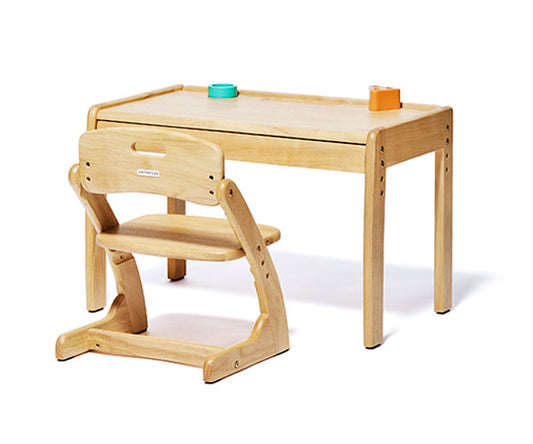
The Buono 3 Kids Desk & Chair is designed with these proportions in mind, with three height adjustments for both the desktop and seat to keep the fit right as your child grows from 18 months to 6 years
Safety and Stability to Look For
For furniture your child uses every day, safety is essential.
Look for:
• Rounded edges with no sharp corners
• A stable, wobble-free frame
• A low centre of gravity that resists tipping
Young children climb, lean, and shift their weight in ways adults rarely expect. Sturdy construction gives you confidence that the desk and chair can handle active play without compromising safety.
A Design That Grows with Your Child
Children grow quickly, and furniture that only fits them today will not serve them for long.
At first, it is a place for drawing and play. Later, it becomes a space for reading and early homework. Because the desk adapts, it stays useful rather than being replaced — which is better for your household and better for the environment.
Materials and Durability
Your child will touch, lean on, and sit at this furniture every day, so the material matters.
Solid wood desks are a popular choice for good reason:
• They feel warm and natural to the touch
• They blend quietly into your living space
• They are built to last through years of active use
For younger children who still put things in their mouths, the safety of the finish matters. Yamatoya uses a finish that will not dissolve or leach, even if mouthed — one less thing for parents to worry about.
Quality materials and thoughtful construction make the desk comfortable and reliable to use over time.
Why Families Choose the Buono 3 Kids Desk & Chair

The Buono 3 Kids Desk & Chair is designed for children aged one and a half to six. — the years when curiosity, creativity, and early independence are all developing at once.
Its compact, solid wood frame fits comfortably into living rooms and children’s bedrooms alike, while three height adjustments for both desk and seat mean it adapts as your child grows.
With rounded edges, a stable base, and a clean design that blends into your home, it is a desk that parents trust and children enjoy using. Many families choose it as their child’s first dedicated workspace.
Key Features of the Buono 3 Kids Desk & Chair
The Buono 3 Kids Desk & Chair combines everyday practicality with the kind of thoughtful design you would expect from a company with 100 years of furniture-making heritage.
The seat and desktop each offer three height adjustments, so you can set them to match your child’s build now and readjust as they grow. Rounded edges throughout and a wide, stable base give you confidence during active play.
At just the right size for small living spaces, it sits naturally alongside your other furniture rather than dominating the room — giving your child a dedicated space of their own without rearranging your home.
Designed for Little Ones to Use Independently
The Buono 3 is proportioned so that even children from 18 months can sit down, reach the desktop, and place their feet flat on the floor — all without help.
That physical comfort makes it easier to stay settled during drawing, picture books, or puzzles. Over time, your child begins to associate the desk with enjoyable, focused activity — and returns to it by choice.
This is how desk habits form naturally: not through instruction, but through a space that feels right.
Solid Wood That Blends into Your Home
Buono 3 is made from solid rubberwood with a natural finish that sits comfortably alongside your living room furniture. Its clean lines avoid the bright, busy look of typical children’s furniture — so it still feels at home as your child grows.
The Coconut colour option adds a soft, warm tone that pairs well with neutral interiors.
Smooth, rounded surfaces feel pleasant under small hands, and the natural grain gives each piece its own character.
Choosing a Kids Desk That Lasts: A Summary
A children’s desk and chair is more than furniture. It is the place where your child builds focus, confidence, and the quiet habit of sitting down to create.
The right choice comes down to three things: a size that fits your child’s body today, a design that adjusts as they grow, and materials built to last through years of daily use.
The Buono 3 Kids Desk & Chair brings all three together — with three height adjustments, rounded edges, and solid rubberwood construction, designed in Japan with over 100 years of furniture-making expertise.
Giving your child their own space is a small step that supports bigger things: concentration, independence, and the joy of learning something new.